Doña Rosa Pottery Studio and Workshop
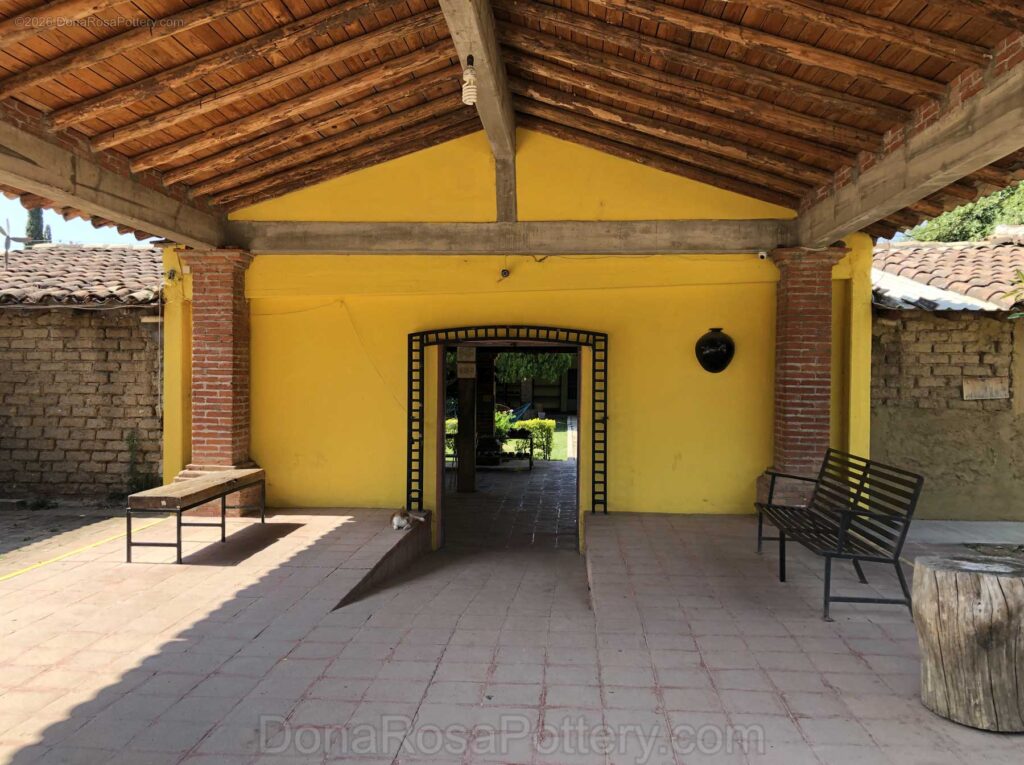
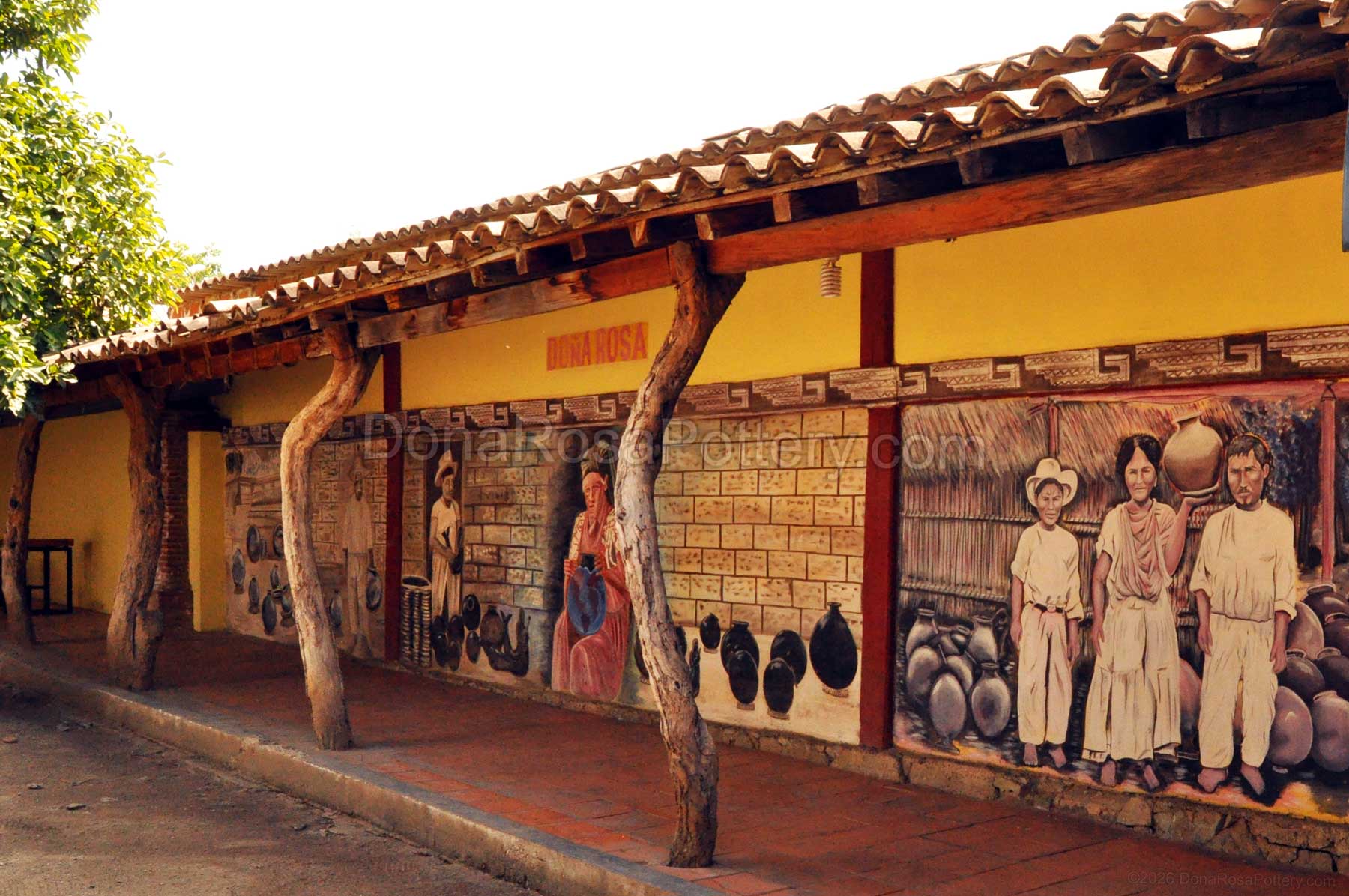
Entrance to Doña Rosa pottery store, studio & workshop.
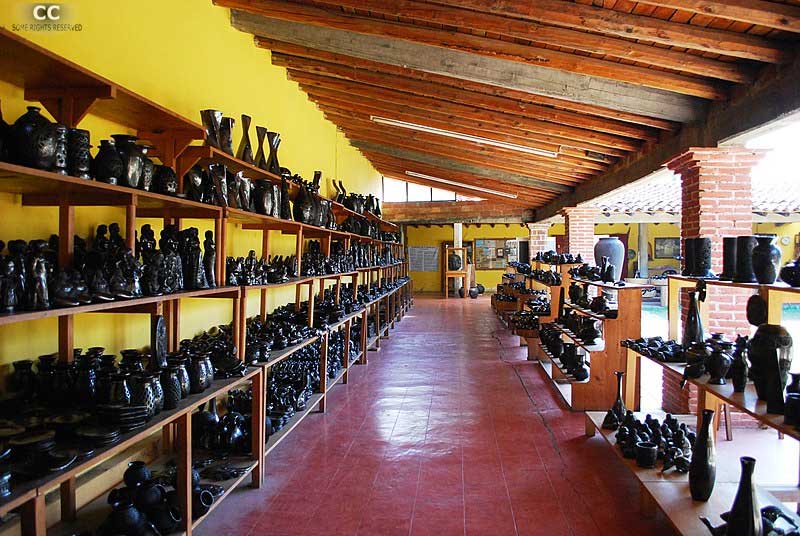
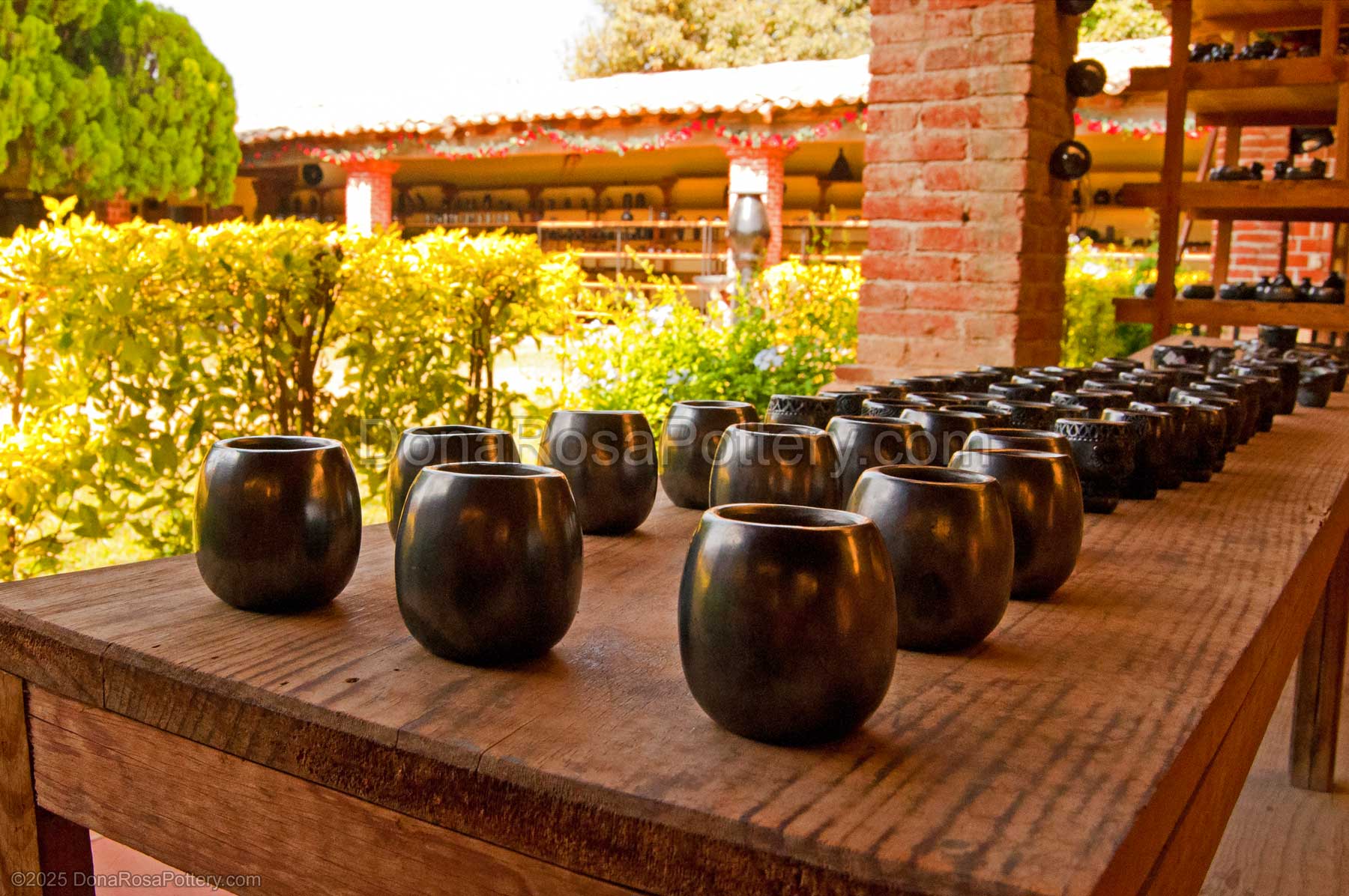
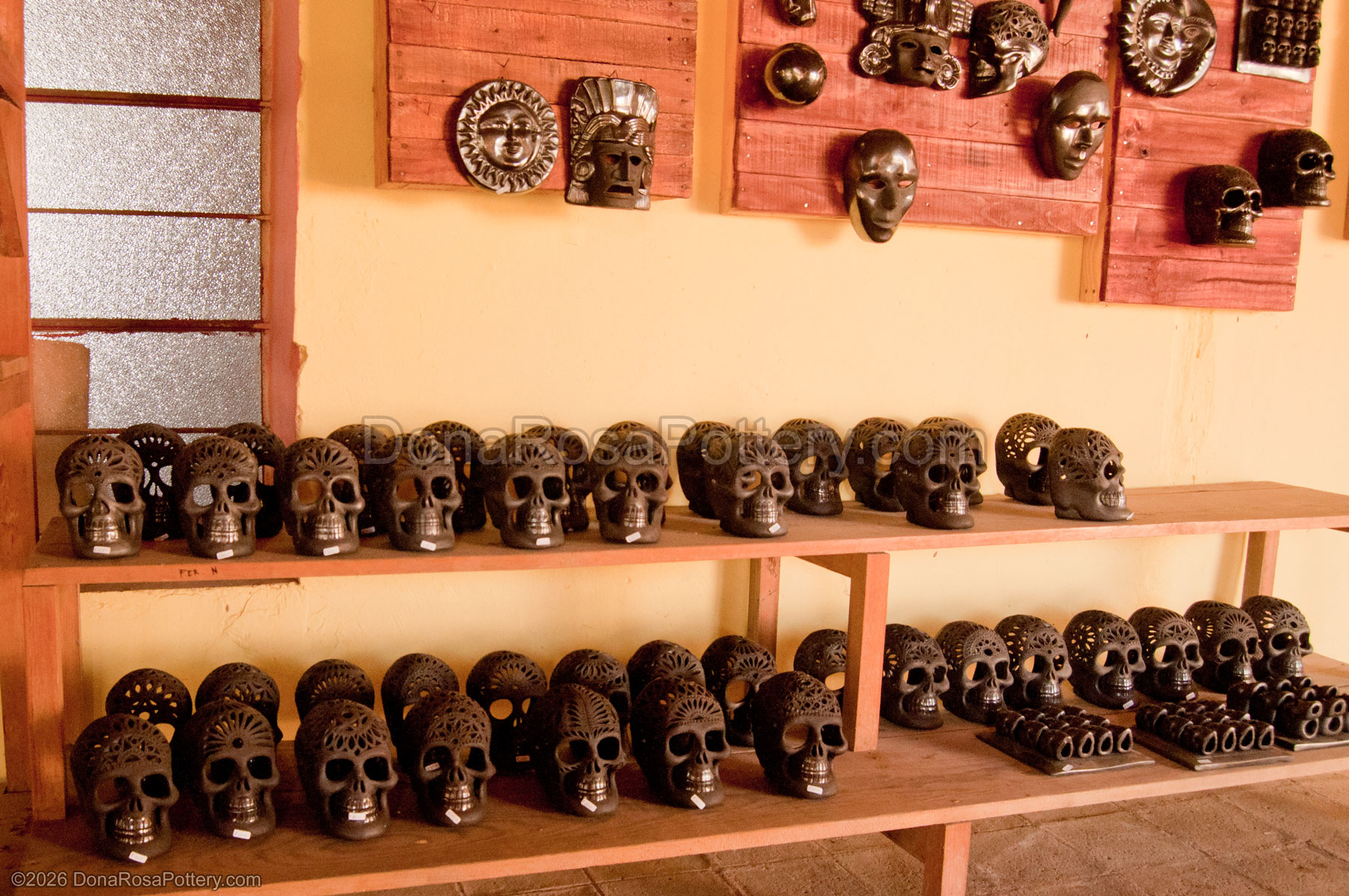
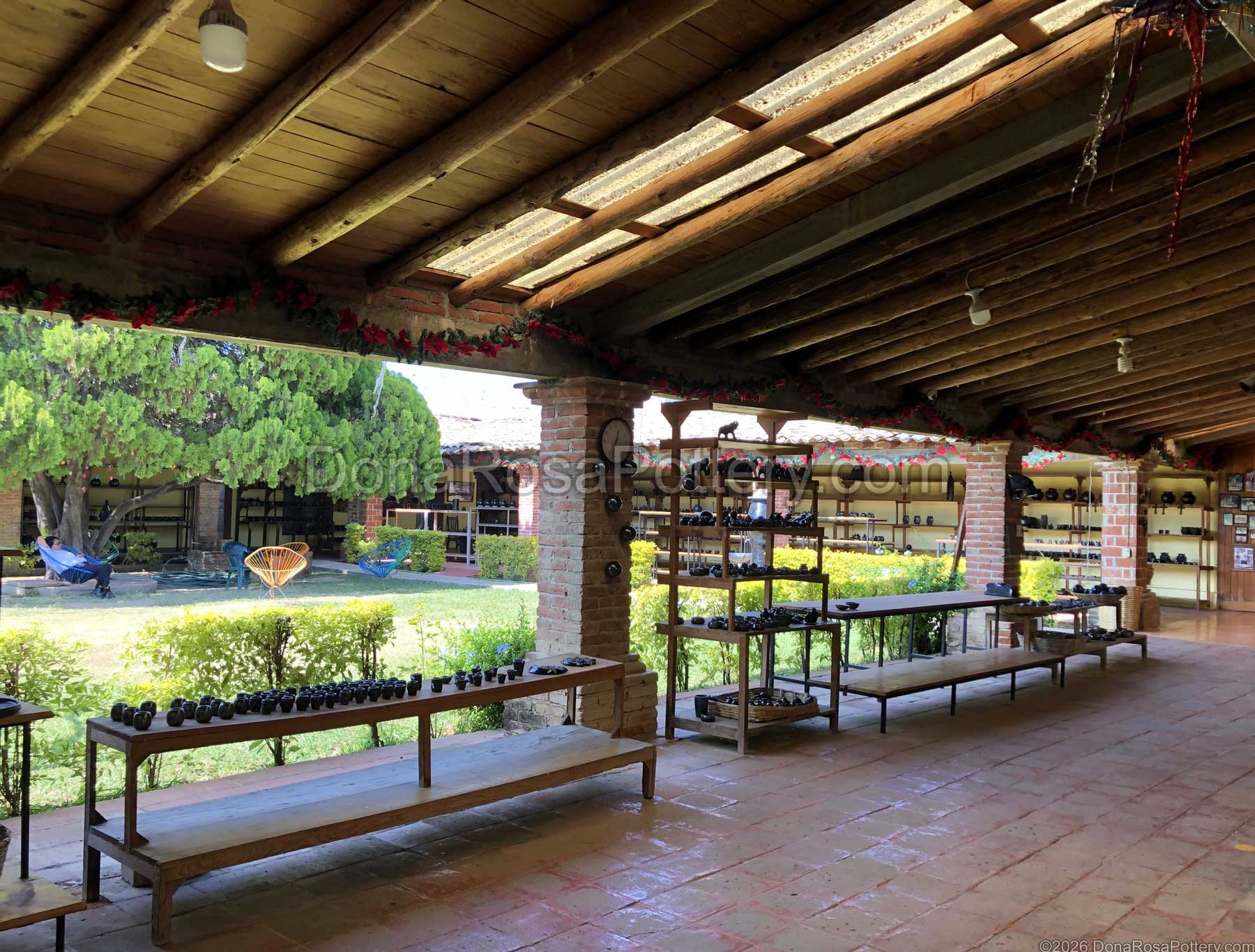
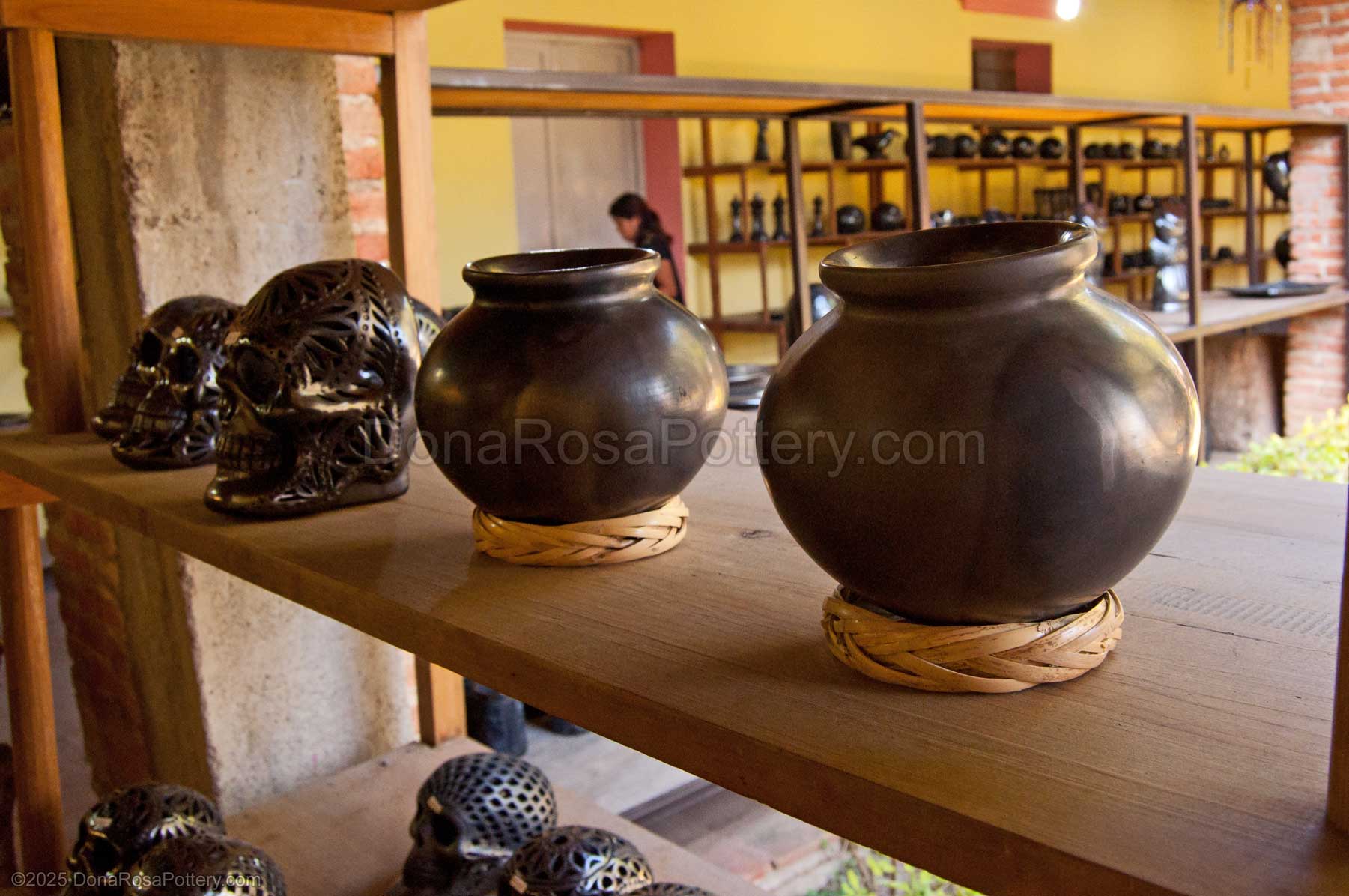
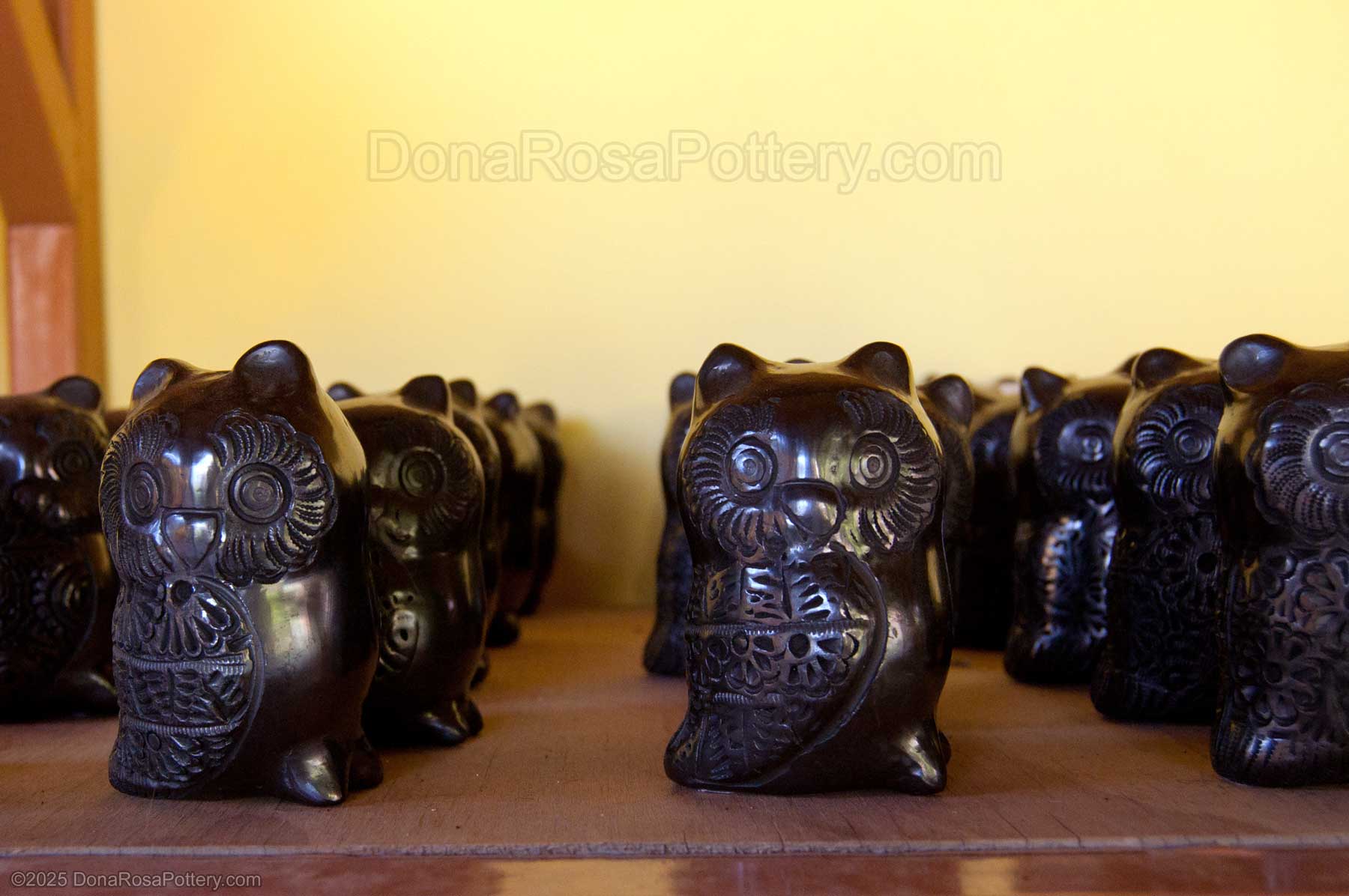
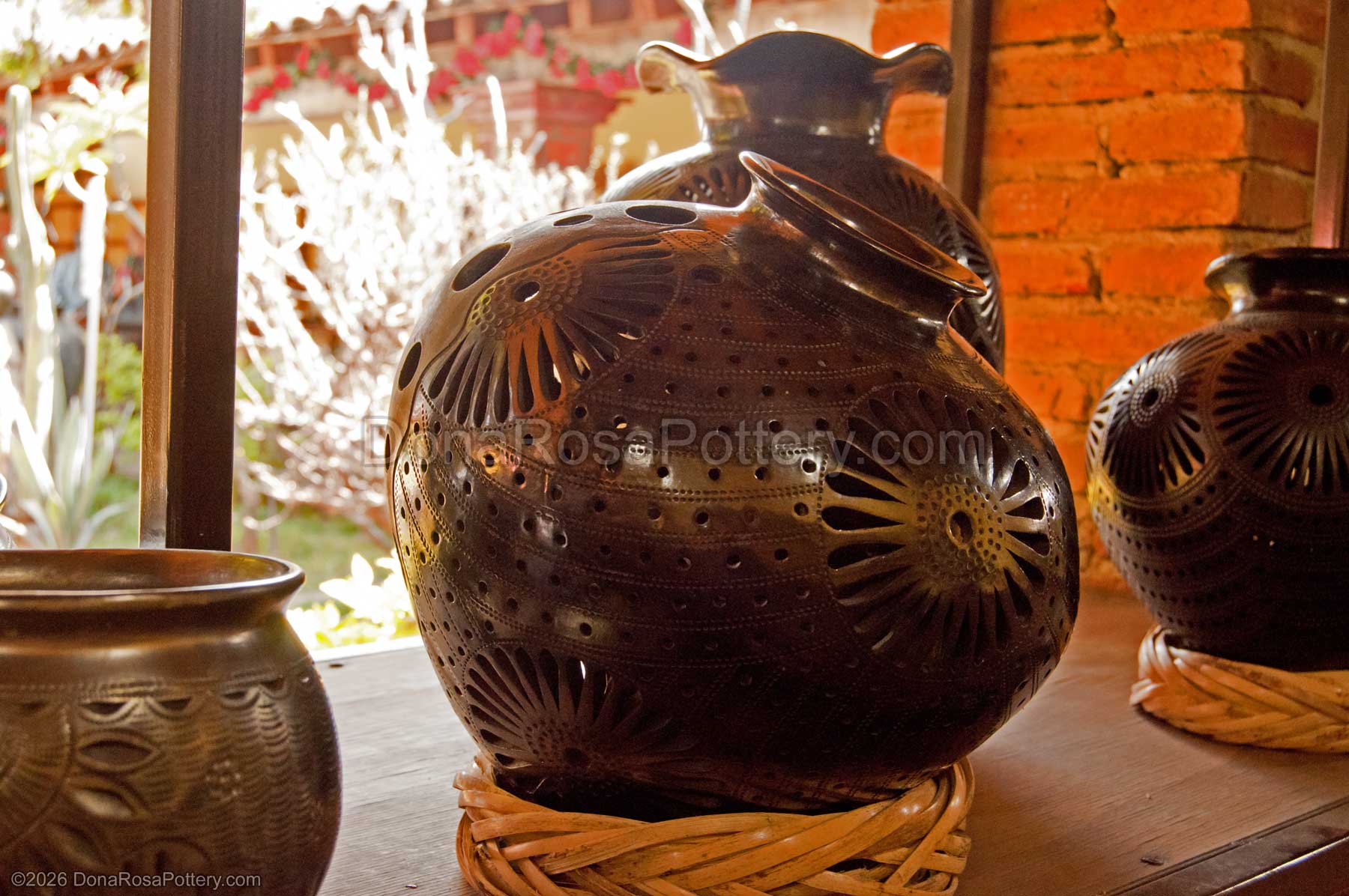
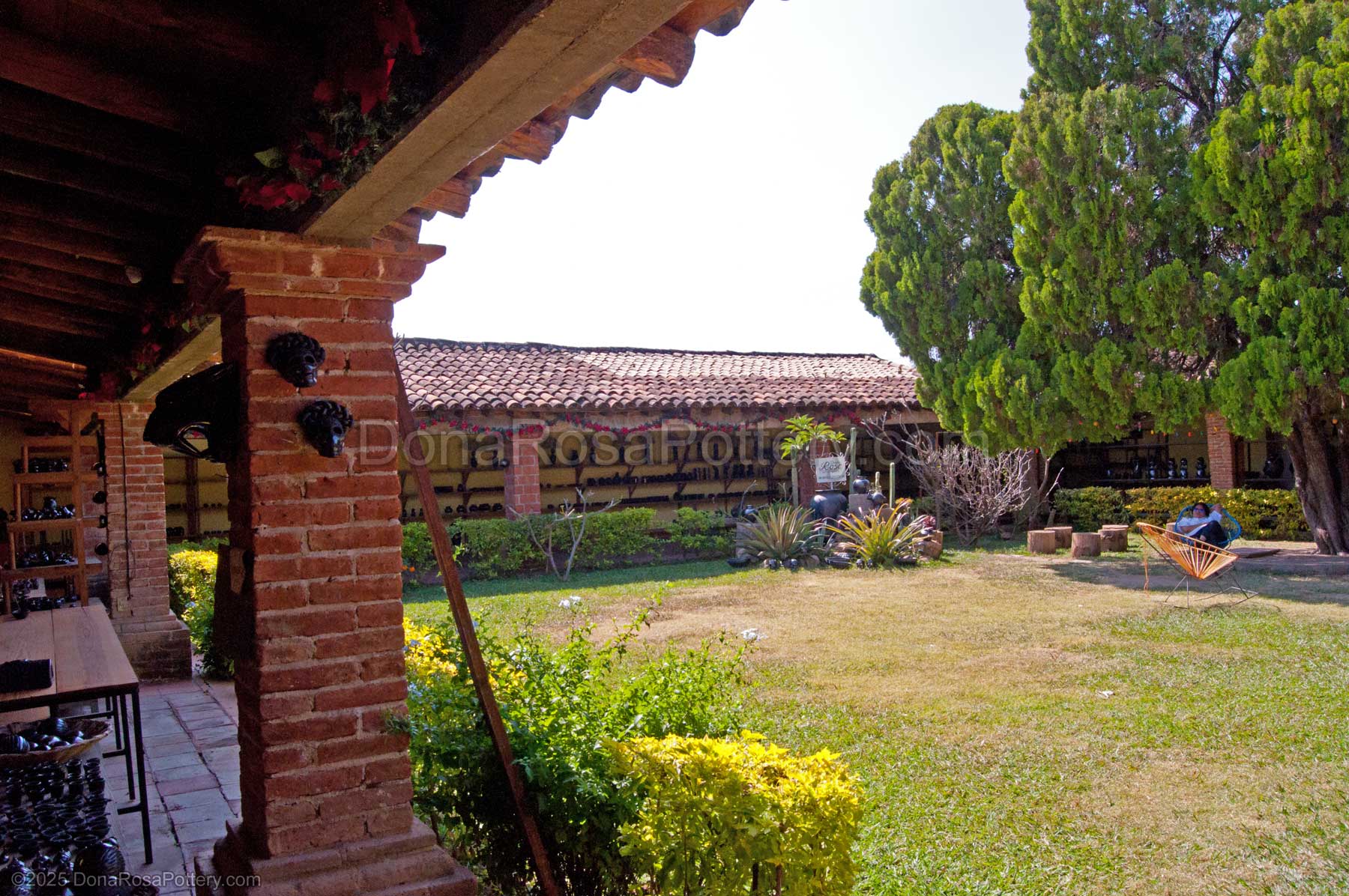
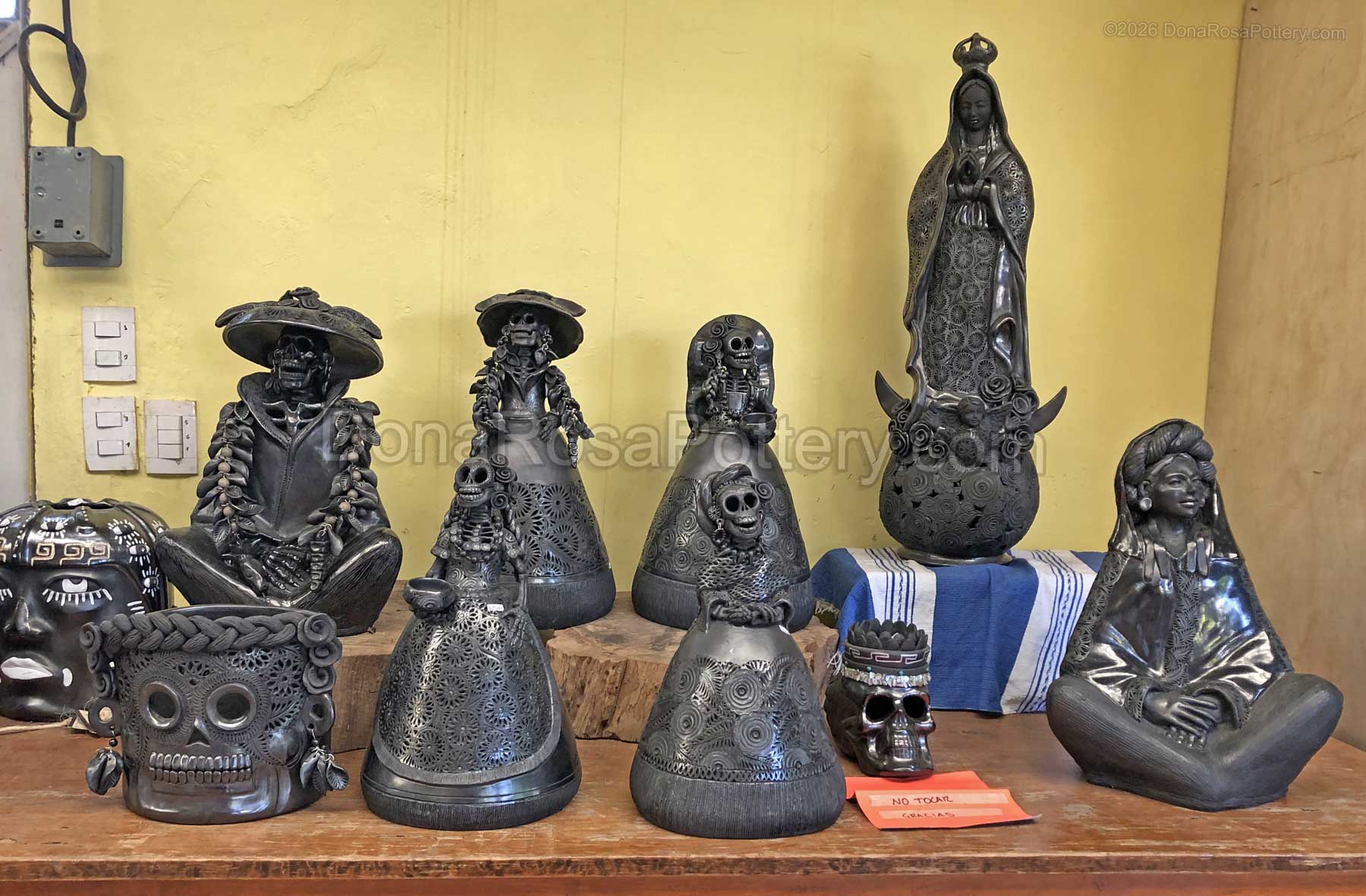
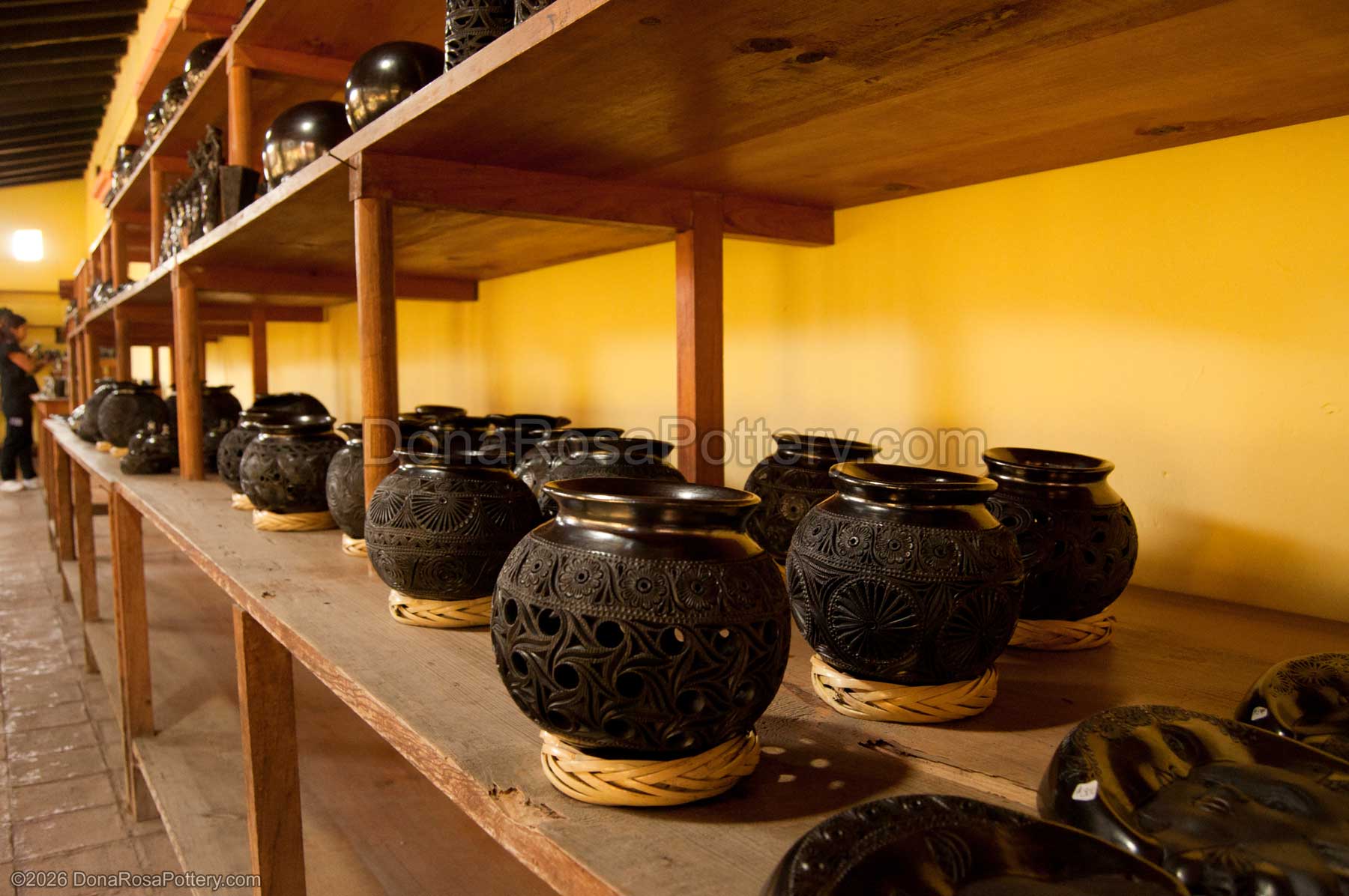
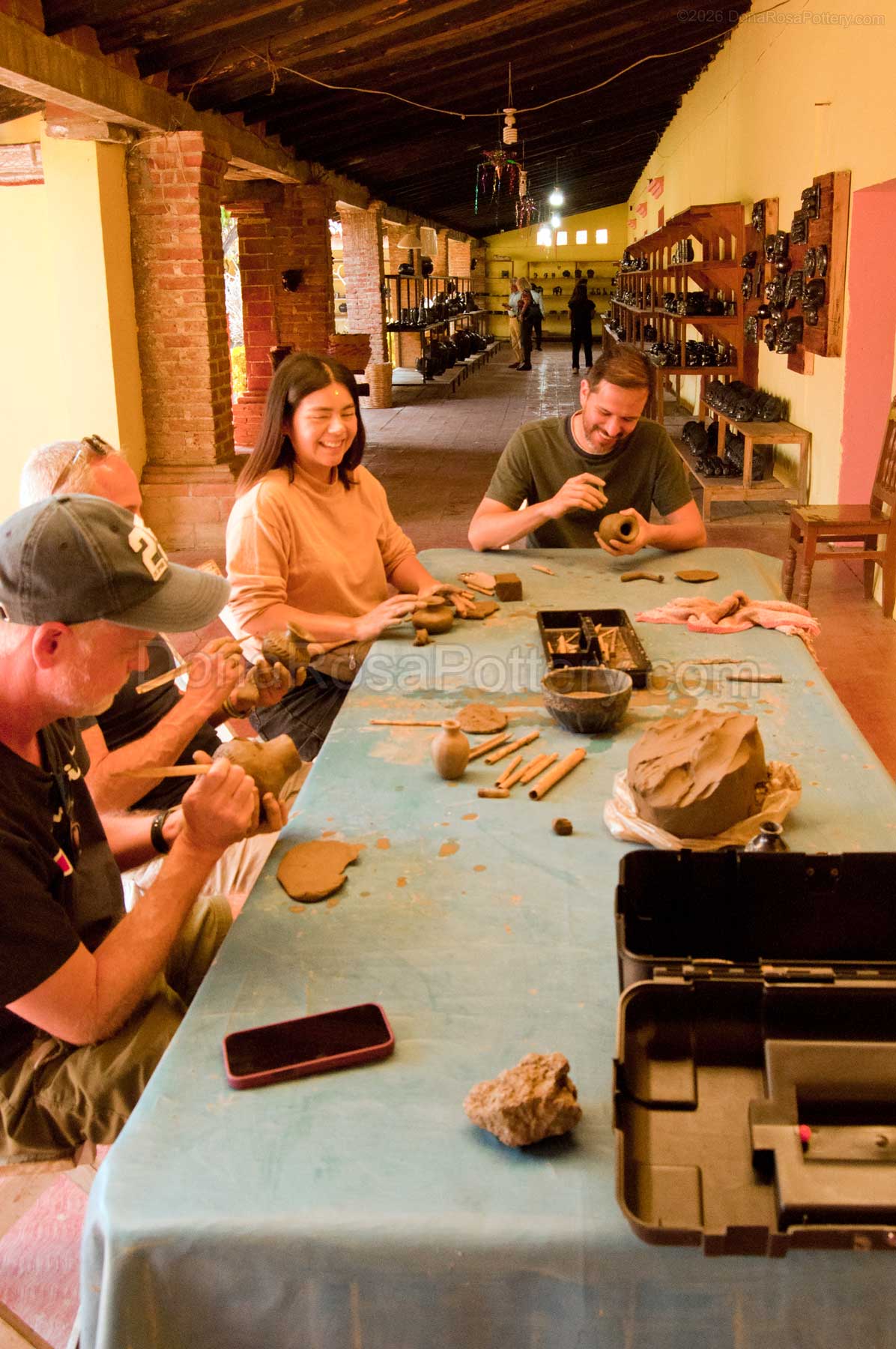
The family home also serves as the store, workshop and studio, with the area surrounding the courtyard lined with shelves full of barro negro crafted on site.
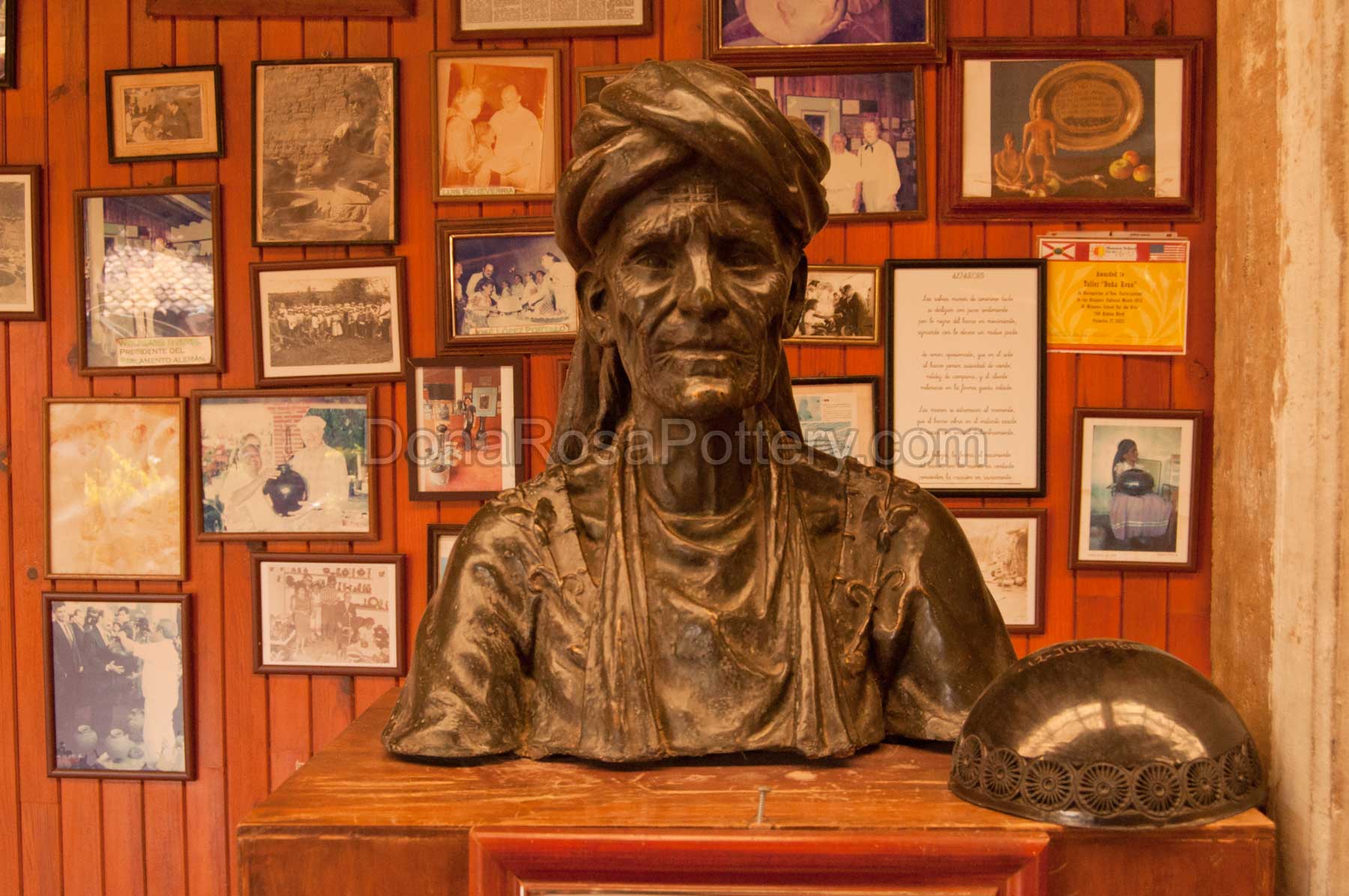 Upon entering the building, you will find a reception area and sales desk, along with an area devoted to memorabilia honoring Doña Rosa, which includes a wall of photos, many showing with well-known figures, and a bust of the departed artisan. Below the
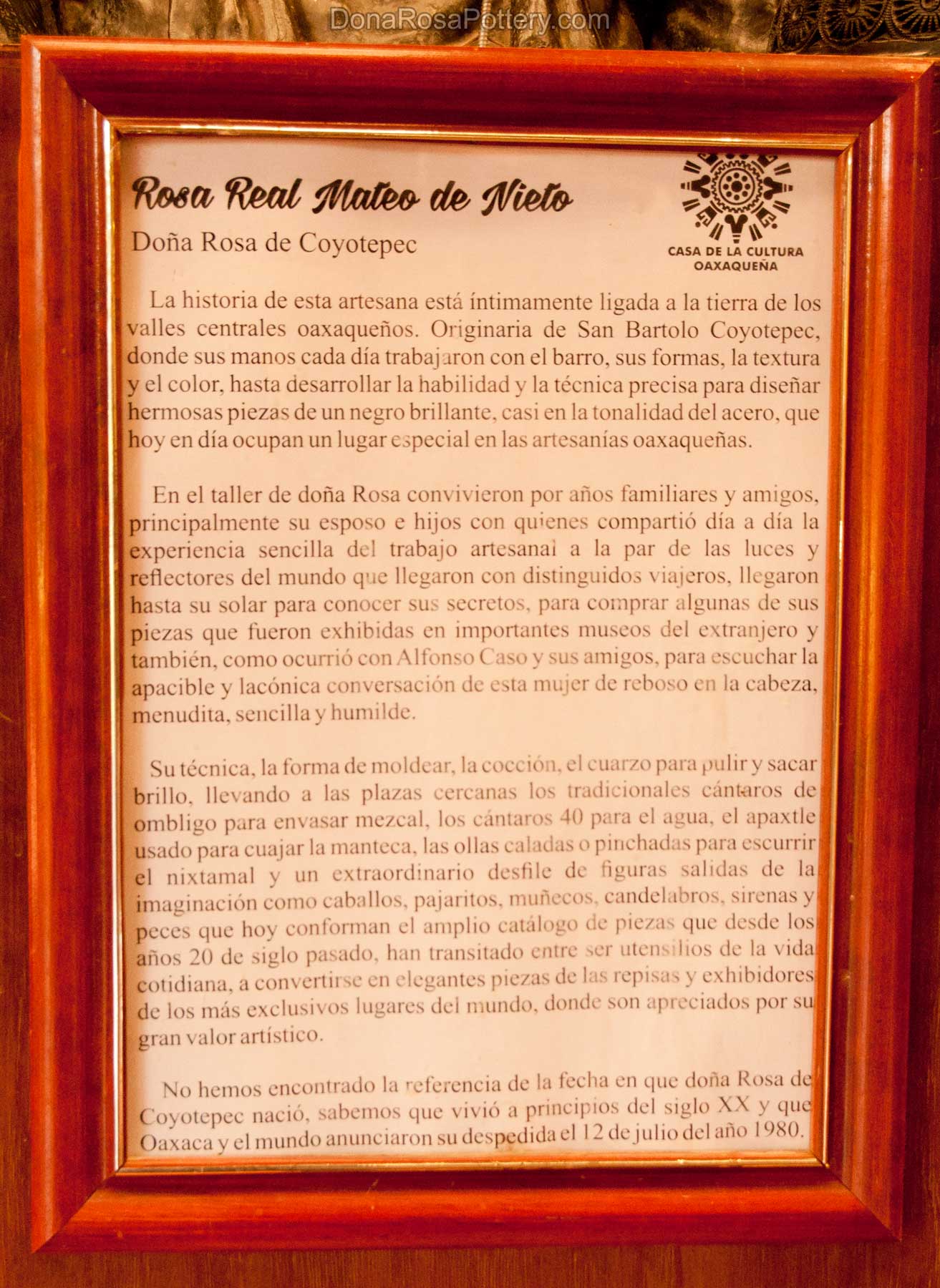
A story of Doña Rosa from the Casa de la Cultura Oaxaqueña
The text is presumed to have accompanied an exhibit
Casa de la Cultura Oaxaqueña
Rosa Real Mateo de Nieto
Doña Rosa de Coyotepec
La historia de esta artesana está íntimamente ligada a la tierra de los valles centrales oaxaqueños. Originaria de San Bartolo Coyotepec, donde sus manos cada día trabajaron con el barro, sus formas, la textura y el color, hasta desarrollar la habilidad y la técnica precisa para diseñar hermosas piezas de un negro brillante, casi en la tonalidad del acero, que hoy en día ocupan un lugar especial en las artesanías oaxaqueñas.
En el taller de doña Rosa convivieron por años familiares y amigos, principalmente su esposo e hijos con quienes compartió día a día la experiencia sencilla del trabajo artesanal a la par de las luces y reflectores del mundo que llegaron con distinguidos viajeros, llegaron hasta su solar para conocer sus secretos, para comprar algunas de sus piezas que fueron exhibidas en importantes museos del extranjero y también, como ocurrió con Alfonso Caso y sus amigos, para escuchar la apacible y lacónica conversación de esta mujer de reboso en la cabeza, menudita, sencilla y humilde.
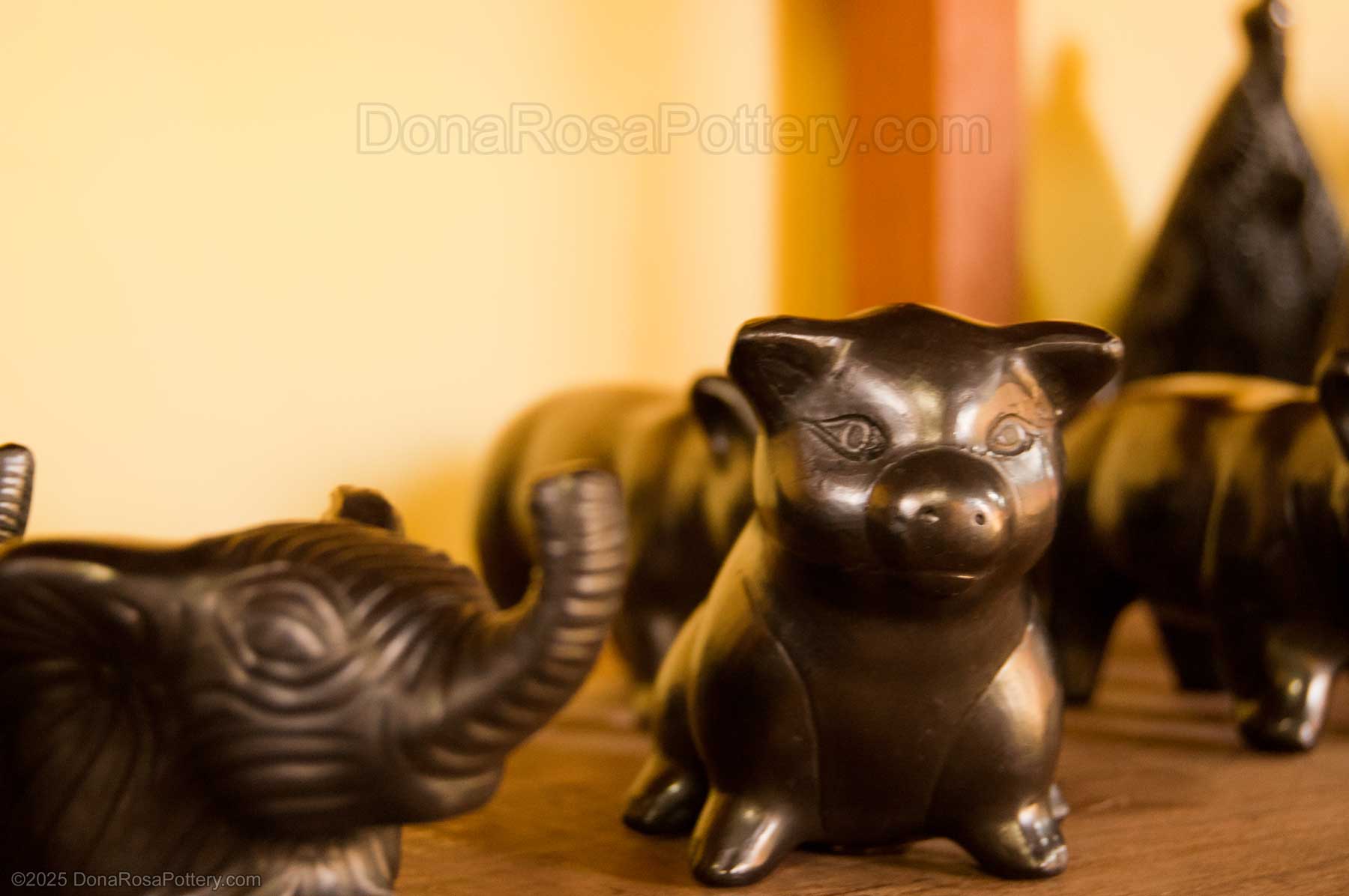
Su técnica, la forma de moldear, la cocción, el cuarzo para pulir y sacar brillo, llevando a las plazas cercanas los tradicionales cántaros de ombligo para envasar mezcal, los cántaros 40 para el agua, el apaxtle usado para cuajar la manteca, las ollas caladas o pinchadas para escurrir el nixtamal y un extraordinario desfile de figuras salidas de la imaginación como caballos, pajaritos, muñecos, candelabros, sirenas y peces que hoy conforman el amplio catálogo de piezas que desde los años 20 de siglo pasado, han transitado entre ser utensilios de la vida cotidiana, a convertirse en elegantes piezas de las repisas y exhibidores de los más exclusivos lugares del mundo, donde son apreciados por su gran valor artístico.
No hemos encontrado la referencia de la fecha en que doña Rosa de Coyotepec nació, sabemos que vivió a principios del siglo XX y que Oaxaca y el mundo anunciaron su despedida el 12 de julio del año 1980.
Translated to English:
Casa de la Cultura Oaxaqueña (Oaxaca House of Culture)
Rosa Real Mateo de Nieto
Doña Rosa de Coyotepec
The story of this artisan is intimately linked to the land of the central valleys of Oaxaca. Originally from San Bartolo Coyotepec, where her hands worked daily with clay, its shapes, texture, and color, until she developed the skill and precise technique to design beautiful pieces of a glossy black, almost the color of steel, which today occupy a special place in Oaxacan handicrafts.
For years, family and friends lived together in Doña Rosa’s workshop, mainly her husband and children, with whom she shared the simple experience of artisanal work day after day, alongside the lights and spotlights of the world that arrived with distinguished travelers. They came to her home to learn her secrets, to buy some of her pieces that were exhibited in important museums abroad, and also, as happened with Alfonso Caso and his friends, to listen to the peaceful and laconic conversation of this petite, simple, and humble woman with a shawl on her head.
Her technique, the way of molding, the firing, the quartz for polishing and shining, bringing to the nearby plazas the traditional navel-shaped jugs for bottling mezcal, the 40 jugs for water, the apaxtle [large clay container] used for curdling lard, the perforated or pierced pots for draining nixtamal [corn prepared for grinding] , and an extraordinary parade of figures born from the imagination such as horses, little birds, dolls, candlesticks, mermaids, and fish that today make up the extensive catalog of pieces that, since the 1920s, have gone from being everyday utensils to becoming elegant pieces on the shelves and displays of the most exclusive places in the world, where they are appreciated for their great artistic value.
We have not found a reference to the date on which Doña Rosa de Coyotepec was born; we know that she lived at the beginning of the 20th century and that Oaxaca and the world announced her passing on July 12, 1980.
More photos coming soon!
If you have photos of the Studio and Workshop or of Doña Rosa Pottery that you would like to share with us, we would love to see them. If they are selected to appear on the website, you will be given photo credit and a link to your website or social media page if you would like.